
Nigerians finally got fiscal relief they can feel in their pockets, and a warning label nobody read out loud.
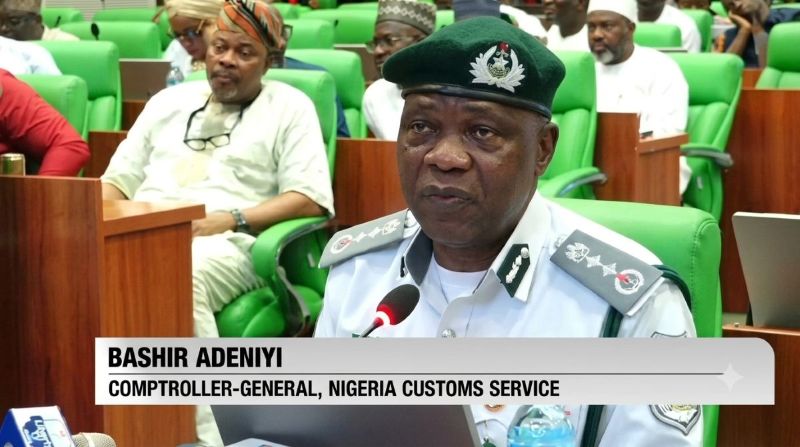
On July 1, 2026, the Nigeria Customs Service began implementing the 2026 Fiscal Policy Measures. The import levy on used vehicles (Tokunbo) dropped from 15 percent to 5 percent. New vehicle import levies fell from 20 percent to 10 percent. Duty on fully built passenger vehicles, already cut from 70 percent to 40 percent back in April, stayed in place. For a country where transportation eats into every other line of the household budget, this is real money.
But the same policy that cuts costs also opens a wider door for older, dirtier, higher-mileage vehicles that the West no longer wants on its own roads. That is the part nobody is putting on a campaign poster.
What the Policy Actually Says
A used vehicle entering Nigeria still stacks a Customs import duty on its Cost, Insurance and Freight value, a 7 percent surcharge on that duty, a National Automotive Council levy, an ECOWAS Trade Liberalisation Scheme levy, and 7.5 percent VAT on top, before the new green charge even enters the math. Cutting one line item from 15 to 5 percent matters, but it isn’t the whole bill.
Alongside the relief, the government rolled out a Green Tax Surcharge, also effective July 1. Contrary to how it’s often described, this is not a blanket tax on all imported vehicles. It is targeted: vehicles with engines between 2,000cc and 3,999cc pay a 2 percent surcharge; vehicles with engines above 4,000cc pay a 4 percent surcharge. Vehicles under 2,000cc, which covers most everyday Tokunbo sedans Nigerians actually buy, pay nothing. Electric vehicles, mass transit buses, and locally manufactured vehicles are fully exempt.
Translation: the average Corolla, Camry, or Civic buyer gets a straightforward discount. The green tax mostly hits Land Cruisers, big SUVs, and performance imports, the Volvo XC90s and Mercedes GLEs of the market, not the family car.
This is not a policy quietly taxing the poor to fund climate optics. It’s a policy that cuts costs for the mass market while nudging the luxury end. The real question is what it does to the volume of aging combustion vehicles entering the country, regardless of engine size.
The Global Pipeline Nobody Advertises
Here is the part the government’s press release will never mention: Nigeria’s affordability policy is arriving at the exact moment the West is retiring its combustion fleet.
The United States, European Union, and China are on track to sell almost nothing but electric vehicles by 2035, with 80 percent of global vehicle sales projected to be electric by 2050. Those old gasoline cars people trade in for EVs don’t vanish. UNEP’s landmark study found that of nearly 14 million used vehicles exported by Europe, the US, and Japan between 2015 and 2018, seventy percent went to low- and middle-income countries, with more than half landing in Africa specifically, and roughly 40 percent of all globally exported used vehicles now end up on the continent.
Two-thirds of the 146 countries UNEP reviewed had weak or nonexistent import standards on age, safety, or emissions. Nigeria is one of them. The former UNEP executive director put the dynamic plainly: developing countries, and Africa in particular, function as the destination for vehicles that are no longer considered safe or clean enough for the countries that built them.
This is not a conspiracy. It’s an incentive structure. The Global North gets cleaner domestic air and a climate headline. The Global South absorbs the mechanical leftovers and, eventually, the waste stream that comes with them, from degraded batteries to the health burden UNEP-linked researchers have tied to lead exposure in children near informal scrap and battery recycling sites.
The Diaspora Is the Bridge, Not the Villain
Every part of that pipeline runs through people like us.
Diaspora buyers in Canada, the US, and the UK purchase auction vehicles and ship them home, not out of malice, but because a cousin in Benin City needs a car, or a nephew wants to start a ride-hailing business, or a trader needs logistics. That is legitimate economic activity. It is also, structurally, the connective tissue between the West’s discarded fleet and Nigeria’s transport gap.
Naming that role honestly doesn’t make anyone a bad actor. It just means the conversation about “cheap cars for Nigeria” cannot stop at price. It has to include what happens to that vehicle in year twelve, when the engine is dead, the tyres are bald, and the battery is leaking into a drainage ditch in Aba or Onitsha.
Why the Affordability Argument Still Holds
None of this is an argument for taking cars away from people who need them.
In a country without functioning mass transit, without affordable financing for new vehicles, and without a domestic manufacturing base that ordinary workers can access, a Tokunbo Corolla is not a lifestyle choice; it’s infrastructure. It’s a Bolt driver’s income. It’s a trader’s supply chain. It’s how a family gets a sick relative to a hospital at 2 a.m.
Telling that population to wait for an electric future that Nigeria’s grid can’t currently support is not climate leadership. It is asking the poorest people to carry a burden the wealthiest countries created and are now offloading.
The Bill That Comes Due Later
The tradeoff is real, even if it’s targeted rather than universal.
More combustion vehicles on Nigerian roads, even efficient small ones, mean more aggregate emissions in cities already choking on traffic and generator fumes. It means more end-of-life vehicles with nowhere formal to go, feeding informal mechanic villages and scrap markets with limited environmental oversight. It means continued dependence on imported petrol in a country repeatedly exposed to fuel-price shocks.
The Green Tax Surcharge is a start at pricing in some of that cost, but only at the top of the market, and only if the revenue is actually used for something. Right now, there is no public accounting of where Green Tax receipts are going.
What Nigeria Should Actually Demand
The fix isn’t fewer cars for ordinary Nigerians. There are better rules around the cars that come in.
- Publish Green Tax revenue use. If it’s collected in the name of environmental sustainability, Nigerians deserve a public ledger showing it funds mass transit, emissions testing, or recycling infrastructure, not general revenue.
- Set enforceable age and roadworthiness limits on used imports, in line with what ECOWAS has already tried to harmonize regionally.
- Build a real end-of-life vehicle and battery recycling framework, instead of leaving degraded lead-acid batteries and fluids to informal scrap networks.
- Keep the exemptions for EVs, mass transit, and local assembly honest, not a backdoor for politically connected importers to inflate prices under a “local content” label.
The Akatarian Takeaway
The 5 percent Tokunbo levy is not a trap for the Nigerian working class, the data doesn’t support that reading. It’s targeted relief, with the heavier environmental cost aimed at the luxury end of the market.
But affordability and accumulation are two different problems, and Nigeria is currently only solving one of them. Cheaper cars today, without a real plan for where those vehicles end up in a decade, is relief now and a bigger bill later, just addressed to a different government.
The diaspora will keep shipping vehicles home. That’s not going to stop, and it shouldn’t have to. What should change is the assumption that affordability and environmental accountability are opposites. They aren’t. Nigeria just hasn’t been asked to prove it can hold both at once.