
Canada just opened a massive door for international physicians already working in its hospitals and clinics. But for the African Diaspora, the hardest lock to pick isn’t the visa—it’s the license.
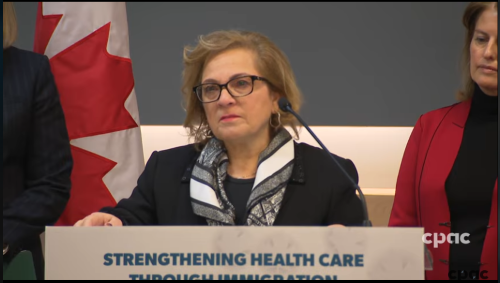
Yesterday, the Canadian government made a historic announcement that sent shockwaves through the International Medical Graduate (IMG) community.
In a bid to tackle its deepening healthcare crisis, Ottawa unveiled a dedicated Permanent Residence pathway for physicians:
- a new Express Entry category for doctors with at least one year of recent Canadian work experience, and
- 5,000 additional federal admission spaces reserved for provinces and territories to nominate licensed doctors with job offers, plus
- expedited work permit processing targeted at about 14 days so physicians can start or continue working while their PR is finalized.
On the surface, this looks like the breakthrough many have been waiting for. It’s a rare, public admission that Canada cannot sustain its healthcare system without global talent.
But at Akatarian, we don’t just read the headlines; we decode the power dynamics inside them.
When we view this through the Diaspora lens, through the eyes of the thousands of brilliant Nigerian, Ghanaian, Kenyan, and South African doctors currently driving Ubers or working as security guards while their clinical skills gather dust, the picture becomes far more complicated.
Canada has built a faster engine.
But it still hasn’t fixed the road.
Here is the Akatarian decode of the new Physician PR Pathway, and what it actually means for our community.
The Visa Fast-Track
Let’s give credit where it is due.
For years, Canada’s immigration system treated highly trained physicians like just another batch of generic “skilled workers,” lumped into the same Express Entry pool as fresh IT graduates. Yesterday’s announcement formally corrects that.
The changes introduce real advantages:
- Dedicated Express Entry Category:
Doctors with at least one year of recent Canadian work experience in eligible physician occupations (e.g., family medicine, medical and surgical specialists) now have their own targeted draw, instead of competing with the entire world on CRS points. - Speed:
Provinces and territories now have 5,000 extra federal admission spaces to nominate licensed physicians with job offers through their Provincial Nominee Programs (PNPs), and the federal government is promising work permits processed in about 14 days for these nominees. - Certainty:
Those 5,000 spaces are on top of existing PNP allocations, signalling a concrete, numerical commitment, not just political talk.
If you are a physician already working in Canada, on a temporary status, with a full or provisional license, yesterday may genuinely have been the best day of your professional life.
Your path to permanent residence and citizenship just became clearer and faster.
But if you are an African-trained doctor still stuck outside the system, this is where the shine starts to fade.
The Hidden Trap: The “Canadian Experience” Catch-22
For the vast majority of Diaspora doctors trying to break into the system, the fine print hides a brutal reality.
To qualify for the new Express Entry category for physicians, you need:
At least one year of recent Canadian work experience in an eligible physician occupation.
In other words, this new “fast-track” is designed mainly for people who are already inside the hospital, not those still trying to get in.
That creates a cruel paradox for many African-trained physicians:
- You need the visa to get the work experience.
- You need the work experience to qualify for the visa category.
- And to get that work experience, you need a provincial medical license or an approved supervised role.
This is where the system has always broken down.
The real bottleneck is not primarily Immigration, Refugees and Citizenship Canada (IRCC).
The real bottleneck is the network of provincial Colleges of Physicians and the Medical Council of Canada (MCC), which control licensing, exams, and recognition of foreign credentials.
If it takes:
- months to years to verify your credentials,
- and more years to fight for a residency position in a system where more than half of international medical graduates go unmatched each year,
…then a “fast-track PR” at the end of that tunnel is cold comfort.
This new federal policy speeds up the immigration paperwork, but it does not automatically speed up credential recognition, residency access, or provincial licensing.
For many African-trained doctors, the wall hasn’t moved. The gate at the end of the wall just opens a little faster- if you ever reach it.
The Trade-Off: The “Golden Handcuffs”
The announcement leans heavily on Provincial Nominee Programs to fill those 5,000 additional spots. This is where the geopolitics of healthcare quietly enters the room.
Provinces like Manitoba, Saskatchewan, and rural regions of Ontario and British Columbia are desperate for doctors. Their hospitals and clinics are understaffed. Locals are waiting months for appointments or using emergency rooms for basic care.
These provinces will happily nominate you for that fast-track PR space.
But there is a price.
That price is called a Return of Service (ROS) agreement.
In plain language:
- You get the Permanent Residence you’ve been praying for.
- In return, you contractually agree to work in a designated rural or high-need community, usually for three years, sometimes longer.
It is, in effect, a pair of Golden Handcuffs:
- The gold: PR status, stability for your family, and a solid Canadian income.
- The handcuffs: Limited control over where you live and practice for the next several years.
For many in the African Diaspora, this is still a fair and rational trade.
If your children’s future, your spouse’s career, and your extended family’s survival depend on that Canadian PR card, three years in a remote community might be a sacrifice worth making.
But we must be honest about the terms:
You are not just being welcomed.
You are also being deployed.
The Akatarian Strategy: How to Hack the New System
If you are an African-trained doctor currently on the sidelines, sending in CaRMS applications, attending webinars, and praying for a residency match that never comes, this policy is a signal that you must change your strategy.
You cannot afford to wait passively for a full Canadian license before trying to enter the system.
You need to use side doors to:
- Secure that one year of Canadian experience needed for the new Express Entry stream, or
- Position yourself to be nominated by a province under their expanded physician PNP slots.
Here are three strategic avenues worth investigating right now.
1. The “Clinical Assistant” Route
Several provinces, such as Alberta, British Columbia, and Nova Scotia, already allow IMGs to work in supervised hospital roles (often called “clinical assistant,” “associate physician,” or similar titles).
You are:
- Not the most responsible physician,
- Often working under the direct supervision of a fully licensed doctor,
- But you are in the system: seeing patients, working in hospitals, getting paid Canadian medical experience.
The crucial detail is this:
Your role’s NOC code and job duties must align with one of the eligible physician codes for the new Express Entry category if you want that experience to count.
That means you should actively confirm with your employer how the job will be classified and whether it can help you:
- Build a track record of Canadian experience that satisfies IRCC’s requirements, and
- Position you competitively for a provincial nomination or future licensing steps.
Even if the role itself doesn’t perfectly match an eligible physician NOC, it still does something very important: it gets you out of the “survival job” trap and into Canadian clinical work, surrounded by decision-makers who can write reference letters and advocate for you.
2. The Practice-Ready Assessment (PRA) Sprint
For many African-trained physicians, the traditional residency route has become a frustrating lottery.
Practice-Ready Assessment (PRA) programs are the alternative.
Examples include:
- Practice Ready Ontario (PRO) – which uses a 12-week clinical field assessment followed by a three-year Return of Service commitment in a rural or high-need community.
- PACE in Nova Scotia and similar programs in Saskatchewan, Manitoba, and other provinces, which assess doctors who are already trained abroad and, if they pass, funnel them directly into provisional licenses and jobs.
These programs are not easy. They are competitive and demanding, but they’re far more direct than gambling on the residency match.
In the context of the new federal measures, PRAs now become:
Primary feeders into the 5,000 additional PNP spots and into the pool of physicians with the Canadian work experience needed for the new Express Entry stream.
If you are currently spending years trying to restart your training from scratch, it may be time to pivot and aggressively target PRA programs instead.
3. The Specialist Fellowship Door
If you are already a highly trained specialist in Africa—a cardiologist, neurosurgeon, oncologist, etc.—you should think very carefully before trying to rebuild from zero as if you just left medical school.
One alternative is to pursue paid Clinical Fellowships at major Canadian teaching hospitals.
This usually requires:
- A sponsoring institution (sometimes your home government or employer),
- Strong academic and clinical references, and
- Passing certain licensing or language benchmarks.
But if you secure such a fellowship, you gain:
- Paid Canadian clinical experience,
- Integration into academic/teaching networks, and
- A much stronger platform for either provincial nomination or future licensing.
Again, the strategy is simple:
Get yourself inside the building, on the Canadian hospital payroll, rather than endlessly sending documents from abroad.
The Final Word
Canada is in a global war for talent, and with this announcement, it has upgraded part of its arsenal.
The new physician-focused PR measures are not meaningless. They will genuinely help many international doctors who are already in Canada, already working, already licensed or provisionally licensed, but trapped in immigration limbo.
However:
- They do not dismantle the structural barriers facing African-trained physicians trying to get licensed.
- They do not solve the years-long struggle to get into residency or pass practice-ready assessments.
- They do not magically unlock the thousands of Diaspora doctors who are currently underemployed in non-medical “survival” jobs.
The door is now unlocked.
But it is still heavy.
For the African Diaspora, success will require strategy, not sentiment, choosing side doors, accepting temporary Golden Handcuffs, and being brutally realistic about where the bottlenecks truly are.
Your Turn:
Are you a foreign-trained physician navigating this new landscape, either in Canada already or still abroad?
- Does this new policy feel like real relief, or just a faster queue to the same bottleneck?
- Would you accept a three-year rural posting in exchange for PR and a guaranteed job?
Share your experience and perspective in the comments. Your story might be exactly what another Diaspora doctor needs to hear before making a life-changing decision.