

A Conversation with Councillor Fred Ngoundjo on Representation, Barriers, and the Work of Daily Governance
At a time when national politics dominates headlines, local governance often goes unnoticed.
But for many communities, especially immigrant and diaspora communities, real integration doesn’t happen in Ottawa’s Parliament. It happens at city hall.
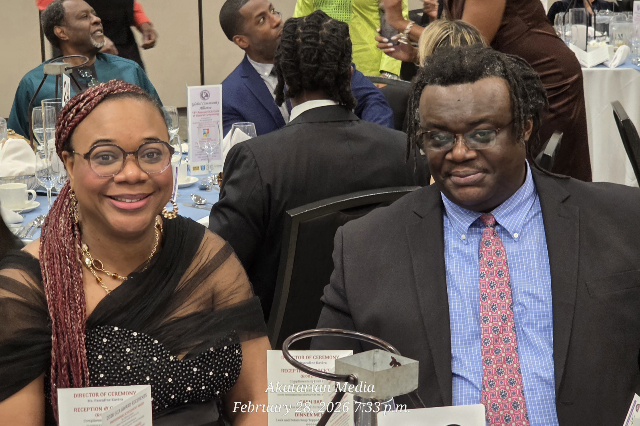
At the recent GCA Gala in Ottawa, I had a conversation with Fred Ngoundjo, elected in 2022 as the first Black male councillor in Cornwall’s history.
What followed was not a speech. It was a grounded conversation about responsibility, barriers, education, and what it actually takes to move communities forward.
Below is our conversation, edited lightly.
On What Representation Changes at the Municipal Level
When asked what representation truly changes, Councillor Ngoundjo did not hesitate.
“It’s very important. First, we are writing history. This opportunity to represent our people around the council table matters.
By being there, we are bringing our issues to the table. Discussions at city council are now taking into account the concerns of small communities, of the Black community.
I say this very humbly, but we are fortunate. We are writing history, and we are changing things – bit by bit. It’s amazing, and I am very humbled to participate in that.”
There was no triumphalism in his voice. Just gratitude – and awareness of responsibility.
On the Barriers Black Communities Still Face
Progress, he emphasized, does not erase obstacles.
“We have many kinds of barriers. First, as Black people, some of us are coming from Africa and other countries, so there are identity matters.
It can be challenging to get good jobs. It’s not easy to find housing. It’s not easy to fight against racism.
All those things are barriers we are facing.”
Yet he spoke about Cornwall with measured optimism.
“In Cornwall, we are proud because we are facing these issues and at the same time solving them. Breaking barriers is a day-to-day job.
We have to be very united and very mobilized to speak about these matters.”
That phrase, day-to-day job, may be the most honest description of governance you’ll hear.
On Inclusion and What Other Cities Can Learn
Cornwall has formally adopted an Equity, Diversity, and Inclusion (EDI) framework, a step he sees as foundational.
“Council decided to apply a policy based on inclusion, especially inclusion of small communities. Now it is official. Cornwall is a community that is open to inclusion.”
He believes cities can learn from one another.
“Ottawa is a very large community, so inclusion is a big matter here. In smaller communities it can sometimes be easier to address these issues.
Events like this are opportunities to learn and to build networks. Through strong networks, we can break barriers and increase inclusion.
We must stay connected with other communities and other cities to make things happen better in our own community.”
For him, networking is not social – it is strategic.
On Evidence-Based Policymaking and Education
As both a municipal councillor and a research scientist, Ngoundjo brings a dual perspective.
He described municipal government as the most immediate level of governance.
“Municipal government is the closest level of government to the citizen. We are very close, and we feel the issues directly.
A resident can call me and say, ‘I have this issue – solve it now.’ As a councillor, I have to respond. That proximity is very strong.”
Then he shifted to what he believes is the most powerful long-term tool:
“One key thing we should work on is education. Education is very important. Education is a weapon we have to break barriers.
Education increases quality of life. It makes integration easier. It supports immigration processes.
Education is something we must support to make our people safer and more secure in their integration journey.”
Education, in his view, is not abstract policy. It is protection.
On the Importance of Community Events
Some dismiss galas as ceremonial. He sees them differently.
“It’s through events like this that we build networks, learn from others, and gain different experiences.
What is happening here is amazing because it gives us the opportunity to learn and to build networks.
Through these events, we can break barriers. We don’t need to go further — it happens here.
I totally encourage this kind of initiative.”
For him, community spaces are not symbolic. They are catalytic.
On One Change He Would Like to See
When asked what change he would most like to see within the Black community, he paused.
“The list is long.
But first, we need more leaders. Representation is very important. We must encourage our people to get involved in our country, Canada.
Second, to have more leaders, our people must understand the value of our new country. Canada has values that should be integrated by our community, and sometimes that can be challenging.
If we understand those values and we develop more leaders, we can shift and make our community brighter and more represented.”
Leadership and integration – in that order.
The Larger Picture
What became clear during our conversation is this:
Representation is not a headline.
It is a responsibility.
Inclusion is not a slogan. It is a policy decision.
And progress is not dramatic. It is daily.
As Black History Month invites reflection on the past, voices like Councillor Ngoundjo’s remind us that the future is being shaped quietly – in council chambers, in policy drafts, and in the steady work of those willing to serve.
The question now is not whether representation matters.
It is whether more are willing to step forward