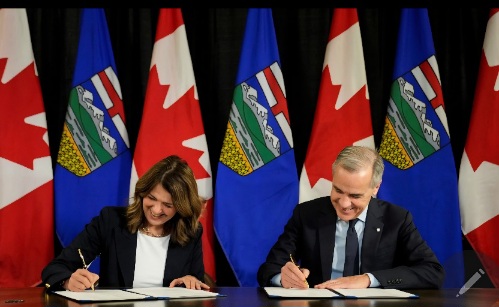

When Climate Virtue Meets Economic Reality
Mark Carney, Canada’s global climate statesman, former central banker, and now Prime Minister, just tore up two of the country’s biggest climate rules in a sweeping pact with Alberta.
The emissions cap? Gone.
The national clean electricity regulations? Gone.
Pipeline approvals? Fast-tracked.
Tanker restrictions? Relaxed.
And just like that, the climate morality police suddenly discovered… flexibility.
Steven Guilbeault, the former environmental activist turned cabinet minister, couldn’t stomach it and resigned on the spot, proof that even inside Ottawa, the climate gospel has denominations.
Let’s be honest: if this move came from an African leader, Western climate activists would have lit their hair on fire and demanded sanctions, conferences, and think-tank condemnations by lunchtime.
But because it’s Canada?
Because economic pressure entered the chat?
Suddenly, pragmatism is acceptable.
This is exactly what Africans have complained about for years: the West preaches climate purity abroad and practices climate realism at home.
The Diaspora Lens: We’ve Seen This Movie Before
African nations—Nigeria, Angola, Mozambique—are constantly told:
- Don’t drill.
- Don’t build pipelines.
- Don’t export LNG.
- Don’t expand fossil fuel use.
- Stick to renewables, even if your people lack reliable electricity.
Yet these same countries pushing these commandments:
- Build LNG terminals when they need heat,
- Relax emissions rules when jobs are threatened,
- Burn more fossil fuels during winter shortages,
- And fly private jets to climate summits to scold the rest of us.
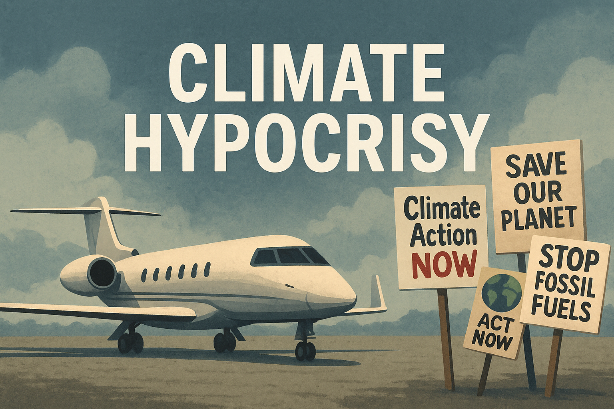
Climate change is real. But climate politics?
A geopolitical chessboard dressed up as morality.
Carney’s deal simply exposes the rulebook:
Climate rules are rigid for the poor, flexible for the powerful.
Why Carney Folded: Follow the Economics
When Donald Trump’s tariffs threaten to wipe $50 billion from your economy, about $1,300 per Canadian, your climate posture quickly transforms into climate yoga: stretching, bending, and twisting to survive.
Ninety percent of Canada’s oil exports go to the U.S.
One market controlling your lifeline is dangerous.
So Carney did what any leader would do when national interest is at stake.
But this raises the uncomfortable question Africans always ask:
If Western leaders reserve the right to prioritize their national interest, why must we commit economic suicide in the name of someone else’s climate timeline?
A Pipeline Alberta Has Begged For
The proposed pipeline to British Columbia’s northwest coast is nothing new. Alberta has begged for it for a decade. Companies avoided it because federal rules made approvals nearly impossible.
Now suddenly Ottawa is offering:
- “Clear and efficient” approvals
- Tanker rule exemptions
- A path to Asian markets
Translation:
When wealthy regions want something, rules become suggestions.
But when African nations try?
Rules become commandments.
B.C. Premier David Eby hates it.
Coastal Indigenous groups have rejected it outright.
Expect more battles. But the signal has been sent.
The Global Signal: Western Climate Diplomacy Just Lost Moral Authority
In Africa’s energy diplomacy circles—Lagos, Accra, Nairobi—this Carney move is already being analysed for what it is:
Proof that Western climate promises collapse instantly the moment they clash with domestic economic pressure.
This matters because the West has spent years:
- Blocking African financing for fossil projects,
- Conditioning aid on climate commitments,
- Accusing Africa of threatening global climate targets,
- Urging “rapid transition” while refusing to do the same.
Now?
The hypocrisy is too loud to ignore.
Carbon Pricing, CCS, and the Nuclear Pivot
Carney and Alberta say they’ll still pursue:
- New industrial carbon pricing rules,
- The world’s largest carbon capture project,
- Expansion of nuclear energy,
- Stronger electricity grids for AI data centers.
All worthy goals.
But the message is clear:
Economic interest decides climate policy, not ideology.
And that is exactly the point Africa has been screaming for a decade.
The Bottom Line
This deal is not just domestic policy.
It’s a confession.
Canada has finally done publicly what Western countries have done privately for years:
- Put national interest first.
- Keep fossil fuels alive.
- Relax climate rules.
- Pursue energy security when threatened.
The only surprise is that they finally admitted it.
For African nations and the diaspora, it’s vindication.
For global climate negotiations, it is a reset.
And for climate activists who love lecturing the developing world?
It’s checkmate.