When Dr. Pius Akutah, Executive Secretary of the Nigerian Shippers’ Council, told maritime editors last week that Nigeria’s seaports still run on “grossly inadequate” legal frameworks, I felt a sharp déjà vu. More than a decade ago, when I was reporting the maritime beat in Lagos, this was the same conversation. We were writing about cargo delays, opaque tariffs, and concession agreements struck in back rooms.
Today, from my desk in Ottawa, I still hear the same refrain. The difference is that this time, Nigeria has a chance to act.
Why this matters
Seaports are not just infrastructure; they are marketplaces where public and private interests collide. If the rules are fuzzy, monopolies flourish, costs skyrocket, and ordinary Nigerians feel it in higher food prices and more expensive goods.
Right now, cargo dwell time in Nigeria averages 20–25 days. In Cotonou, Tema, or Durban, it’s 3–7 days. That gap translates into hundreds of millions of dollars annually in demurrage and storage fees. Studies show that almost three-quarters of these delays are “transactional”, caused by bureaucracy, overlapping agencies, and multiple payments. It is not the physical moving of boxes. It’s not cranes we lack, it’s clarity.
The law we need
Since 2015, the Nigerian Shippers’ Council has acted as ports economic regulator by presidential order. But an executive order is not a law. It’s like running a modern port with a typewriter: functional, but outdated and easy to override.
The Nigerian Ports Economic Regulator Bill (NPERA), already passed by the National Assembly and now awaiting the President’s signature, is designed to change that. If enacted, it would:Give the regulator power to monitor prices and charges transparently.
End the confusion of multiple agencies issuing contradictory tariff notices. Create fast-track dispute resolution so cargo isn’t held hostage to litigation. Enforce competition rules in a market dominated by a few powerful operators.This is not about bureaucracy for its own sake. It is about building predictability, the kind of stability that attracts investment and lowers costs.
Why now?
Nigeria’s moment is ripe.
Global standing: Nigeria just assumed chairmanship of the World Customs Organisation Council. It is embarrassing to preach reform abroad while cargo languishes at home. Infrastructure shift: The new Lekki Deep Sea Port handled nearly 300,000 TEUs in 2024 and could hit half a million this year. This is Nigeria’s chance to set new standards from day one.
Technology upgrades: NPA has rolled out an electronic truck call-up and Customs is deep into its automation programme. But without a strong regulator, these innovations can be undermined by opaque charges or agency turf wars.
Lessons from abroad
Singapore runs its ports on a statutory regulator (the MPA) with clear economic powers. That clarity has made Singapore the world’s transshipment hub.
The European Union enforces strict transparency rules for state support, preventing subsidies from distorting competition.
The United States weaves labour stability into port law, ensuring that strikes don’t cripple trade.
Nigeria doesn’t need to reinvent the wheel. It needs to adopt proven frameworks and enforce them locally.
The human cost of delay
Behind all the acronyms and legislation are real people. Importers who take loans to clear goods, only to see their containers sit idle. Traders who lose customers because stock arrives weeks late. Consumers who pay more for rice, sugar, or spare parts because inefficiency is priced into every shipment.
When we talk about reducing dwell time from 25 days to 7, we are not just speaking in percentages. We’re talking about putting food on tables, lowering inflationary pressure, and creating jobs through cheaper trade.
But laws alone don’t enforce themselves
Nigeria’s challenge has never been drafting reform. It’s living it.
Three old ghosts haunt every new policy: impunity, capture, and coordination failure.
Some officials treat rules as optional. Powerful operators lobby to soften enforcement. And fragmented agencies pull in different directions. Unless the new law tackles those weaknesses head-on, the status quo will simply rebrand itself as reform.
That’s why the law must come with guardrails:
- Statutory independence and secure funding for the regulator.
- Public consultations and published tariff schedules to block back-room deals.
- Automatic penalties and rebates tied to service-level targets.
- Inter-agency MOUs that make Customs, NPA, and the regulator jointly accountable.
- Performance dashboards published monthly so citizens can see who is meeting the mark.
Only transparency can break impunity’s grip.
The bottom line
One presidential signature can give Nigeria a modern port regulatory law. It won’t magically fix congestion or corruption, but it will create the legal backbone for real accountability.
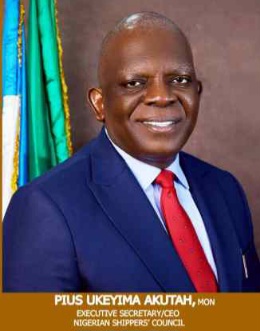
Dr. Akutah is right: law plus enforcement equals results. The question is whether Nigeria will seize this moment, marrying its new global prestige with the domestic reforms it has delayed for too long. Because until we match ambition with law, Nigeria’s ports will remain what they have always been: gateways of potential, bottlenecked by indecision.
One signature can set the legal foundation. But only consistent enforcement, transparent reporting, and genuine political will can sustain it.
Nigeria doesn’t just need clarity on paper. It needs courage in practice.
Because cranes don’t clear cargo, people do.