
The day “bow and go” died
The hearing room is packed, but the usual Senate swagger is gone. For years, confirmation days in Abuja’s red‑chamber meant jokes, handshakes, and the familiar phrase: “Take a bow and go.” Friends were waved into sensitive offices with minimal questions, especially in defense and security portfolios.
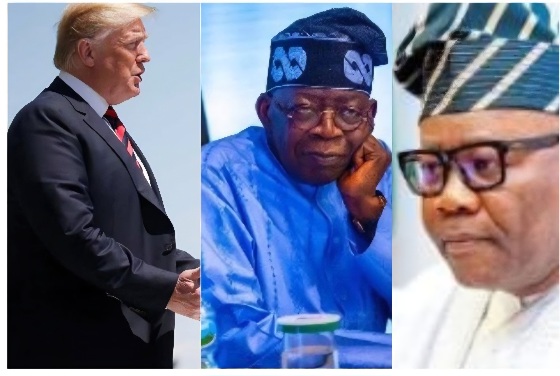
Today, the air feels different. Senate President Godswill Akpabio doesn’t smile as the nominee for Minister of Defense, Gen. Christopher Musa takes his seat. He reminds his colleagues that a brigadier general was recently abducted and allegedly killed after his exact coordinates, given while calling for help, somehow reached the terrorists instead of the rescue team. He recounts how troops were ordered out of a community barely 30 minutes before gunmen swept in and carried off over 200 schoolgirls, echoing earlier mass abductions that shocked the world.
Nigerians, he says, want to know who leaks locations, who issues withdrawal orders, and who profits when civilians and soldiers are left to die. This is not a day for “bow and go”; it is a day for answers.
The numbers behind the fear
Outside the chamber, the statistics form a grim backdrop to the drama. A detailed report by the International Society for Civil Liberties and Rule of Law (Intersociety) estimates that in the first 220 days of 2025 alone, at least 7,087 Christians were massacred across Nigeria, an average of roughly 30–35 killed every day. This same research estimates that since 2009, around 185,000 people have been killed in conflict and terror attacks nationwide, including about 125,000 Christians and 60,000 moderate Muslims, with more than 19,000 churches destroyed, over 1,100 Christian communities displaced, and large swathes of land effectively seized by armed groups.
International advocacy organizations argue that roughly 80 percent of Christians killed for their faith worldwide are Nigerians, and millions of Nigerian Christians are now internally displaced, often forced out by a mix of jihadist insurgents, bandit militias, and communal militias that exploit weak governance and corrupt security structures.
While some scholars and media outlets warn against simplifying every attack as purely “religious,” the geographic concentration of violence, targeting of churches, and repeated testimonies of victims have driven an intense debate over whether Nigeria is witnessing a “silent genocide” against Christians.
U.S. pressure and the flight to Washington
The political costs of that debate surged when President Donald Trump publicly threatened to act directly against terrorists killing Christians in Nigeria, signalling that the Pentagon was being readied for possible counter‑terror measures that could bypass or embarrass Abuja. As U.S. commentators, lawmakers, and Christian advocacy groups amplified narratives of Nigerian Christian genocide, the Nigerian government pushed back, issuing statements rejecting the label and insisting the violence is complex, multi‑causal, and not state‑sponsored.
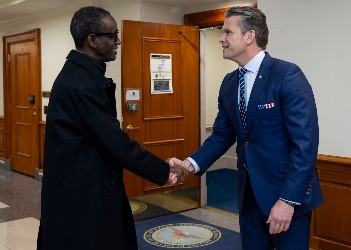
Amid this storm, Nigeria’s National Security Adviser, Nuhu Ribadu, flew to the United States for high‑level talks, including with Secretary of the Department of War Pete Hegseth, in an effort to manage spiralling accusations and to defend Nigeria’s sovereignty while still seeking security cooperation.
Behind closed doors, U.S. officials brought data showing thousands of Christian deaths, large‑scale displacement, and persistent impunity, while asking why Abuja has been slow to prosecute extremists and why alleged sponsors inside the system remain untouched. For Nigeria, the stakes are existential: failure to act decisively risks not only further bloodshed but also the perception that the state is either unwilling or unable to protect its own citizens.
Amnesty, “repentant” fighters, and the forbidden fruit of prosecution
For over a decade, one of the most controversial pillars of Nigeria’s counter‑terror strategy has been its leniency toward captured fighters. Successive administrations leaned heavily on amnesty programs and “rehabilitation” schemes that allowed thousands of militants and bandits to surrender in exchange for promises of reintegration, stipends, and in some cases recruitment into state‑linked vigilante outfits or even auxiliary security roles, rather than facing full criminal prosecution. Human rights and victims’ groups have long argued that this approach, applied in the middle of ongoing atrocities, sends a dangerous signal that mass killers can negotiate their way back into society while survivors receive little justice or compensation.
Before Trump’s threat of direct action and the surge of global attention to Christian killings, serious terrorism prosecutions were rare and politically sensitive, often treated like a “forbidden fruit” in a system where some power brokers allegedly benefitted from the chaos. That pattern began to shift only when Abuja, under growing external pressure, started talking about prosecuting at least one widely known, previously “untouchable” terrorist figure, and when security agencies were pushed to show that amnesty would no longer shield high‑value perpetrators. Even then, skepticism remains deep in affected communities, which have watched waves of violence roll through their villages while perpetrators disappear into opaque “de‑radicalization” pipelines.
Inside deals and alleged state complicity
The crisis of trust is not driven by numbers alone; it is powered by specific episodes that suggest a disturbing overlap between the world of politics and the world of terrorists. Former Kaduna State Governor Nasir El‑Rufai publicly acknowledged paying around 100 million naira to armed herder militias during his time in office, saying the payment was meant to persuade them to stop attacks and relocate, a move critics saw as state‑sanctioned ransom that rewarded violence and normalized bargaining with killers. In another chilling case from earlier years, a notorious Boko Haram figure, Kabiru Sokoto, was arrested at a state governor’s lodge, fueling allegations that elements of the political elite were not merely negligent but directly entangled with insurgent networks.
These are not isolated incidents. Over the years, senior officials have been photographed or reported attending “peace meetings” in which terrorists dictated terms, including locations, security arrangements, and even dress codes. In one widely cited anecdote, militants allegedly instructed government negotiators on what to wear, while one of the insurgent leaders appeared in the uniform of a senior police officer previously killed. A macabre symbol of inversion where the state’s authority literally clothed its enemy. Combined with repeated reports of leaked military operations, mysterious orders to “stand down,” and selective protection for certain areas, these stories nourish a narrative that Nigeria’s security crisis is not only about capacity, but about divided loyalties inside the system itself.
The Senate’s own house under suspicion
This backdrop makes the recent shake‑up in the Senate even more significant. The removal of Senator Shehu Buba Umar as Chairman of the Senate Committee on National Security came after reports that he had appeared on U.S. intelligence watchlists for alleged links to local terrorist financiers and extremist groups.
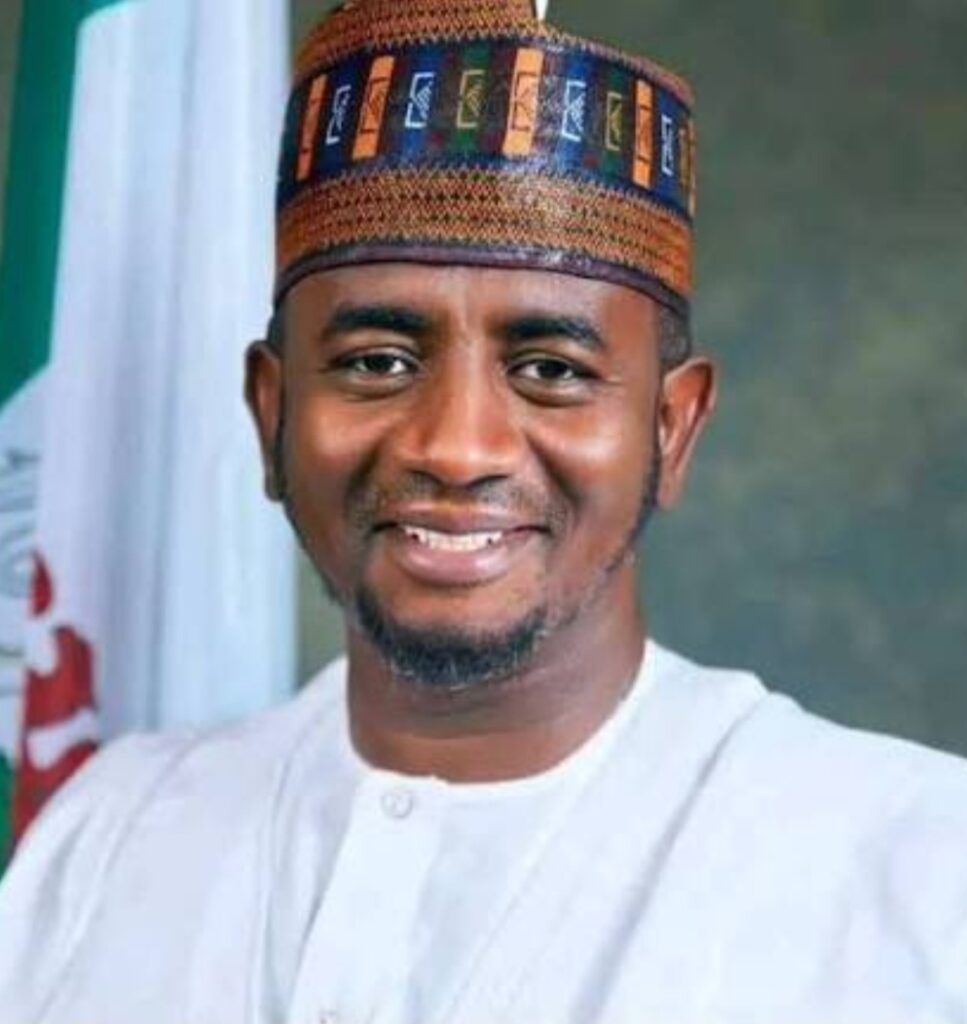
Security sources in Nigeria accused him of quietly facilitating sponsorships for bandits and radical elements, including funding trips to Mecca under the guise of pilgrimage subsidies while allegedly strengthening violent networks at home. His ouster signals that foreign scrutiny is now directly reshaping the internal balance of power in Abuja’s political class, especially in committees that control security budgets and oversight.
With Umar’s exit, lawmakers are promising deeper investigations into how political financing, committee appointments, and informal patronage may have allowed insecurity to metastasize. The symbolism is stark: the very committee charged with national security is forced to purge its own leadership under a cloud of terror‑related suspicion. For a Senate long accused of shielding its own, this is both a defensive move and a public admission that the system is compromised.
Christian communities on the front line
While Abuja scrambles, Christian communities in central and northern Nigeria continue to bear a disproportionate share of the violence. Rights monitors document villages where churches have been burned, pastors kidnapped, and congregations forced to flee, sometimes multiple times, as attacks roll across rural districts. States like Benue, Plateau, Kaduna, and parts of Niger and Nasarawa have seen massacres that empty entire communities, with victims describing attackers arriving by motorcycle or truck, often heavily armed, sometimes speaking foreign dialects, and striking at night or during worship. Beyond the casualties, the long‑term impact is visible in abandoned farms, shuttered schools, and swelling camps of displaced families.
One faith‑based monitoring group estimates that over 3 million Nigerian Christians are internally displaced, with more than 10,000 schools shut or destroyed across northern regions, deepening illiteracy and vulnerability among children who have already witnessed extreme violence. The trauma is generational: children grow up knowing the names of terrorist leaders better than local officials, while parents learn that appeals to government often end in silence or symbolic visits after attacks.
Global narratives, local complexity
Internationally, the framing of Nigeria’s crisis has split opinion. Some U.S. evangelical leaders, conservative commentators, and advocacy groups describe the situation as a clear‑cut Christian genocide, citing the scale of killings, the targeting of churches, and patterns of impunity. Nigerian officials, some human rights scholars, and outlets like Al Jazeera counter that while Christian communities are undeniably suffering catastrophic violence, the conflict map also includes Muslim victims, resource conflicts, ethnic grievances, and state failure, making “genocide” a legal and analytical category that requires caution and precision. Yet even critics of the genocide label acknowledge that the Nigerian state has a chronic problem with accountability, particularly in cases where security forces arrive late, withdraw early, or fail to make serious arrests after large‑scale massacres.
Amnesty International and other rights groups have documented thousands of killings since 2023 across states like Benue, Plateau, Kaduna, and Nasarawa, with very few prosecutions. This reinforces the perception that perpetrators can operate with near total impunity. In that context, the legal debate over terminology does little to comfort those who count bodies and burned homes; what they see is a pattern of targeted destruction and a state that has not stopped it.
Back in the chamber: objectivity and survival
Back in the Senate hearing room, Akpabio’s decision to end the “bow and go” era is as much about personal safety as institutional reform. Senators have started receiving direct threats: they are no longer just lawmakers approving defense chiefs; they are potential hostages in a war they once watched from a distance. The realization is brutal, that the same networks that kidnapped generals and schoolgirls, aided by leaks from within the system, could one day target convoy‑driving legislators.
In that sense, the new scrutiny of appointees, the sacking of compromised committee heads, and the tentative move from amnesty to prosecution are less about sudden moral clarity and more about convergence: the interests of ordinary Nigerians and the interests of the elite are finally aligning around the most basic instinct—survival. Objectivity, in this investigative picture, means holding multiple truths at once: the violence is complex and multi‑sided, but Christians have borne staggering losses; state agents are fighting terrorists, but some officials have also funded or appeased them; Nigeria rejects the genocide label, yet its failure to protect and prosecute has made that label thinkable in the first place.
Whether this moment becomes a real turning point will depend on what follows the headline gestures. If high‑profile terrorists are finally prosecuted instead of recycled, if political sponsors are exposed rather than quietly retired, and if Senate oversight shifts from ceremony to genuine scrutiny, then this could mark the beginning of a slow restoration of trust. If not, then the end of “bow and go” will be remembered not as reform, but as a brief, televised panic in a long war that Nigeria has yet to admit it is dangerously close to losing.